
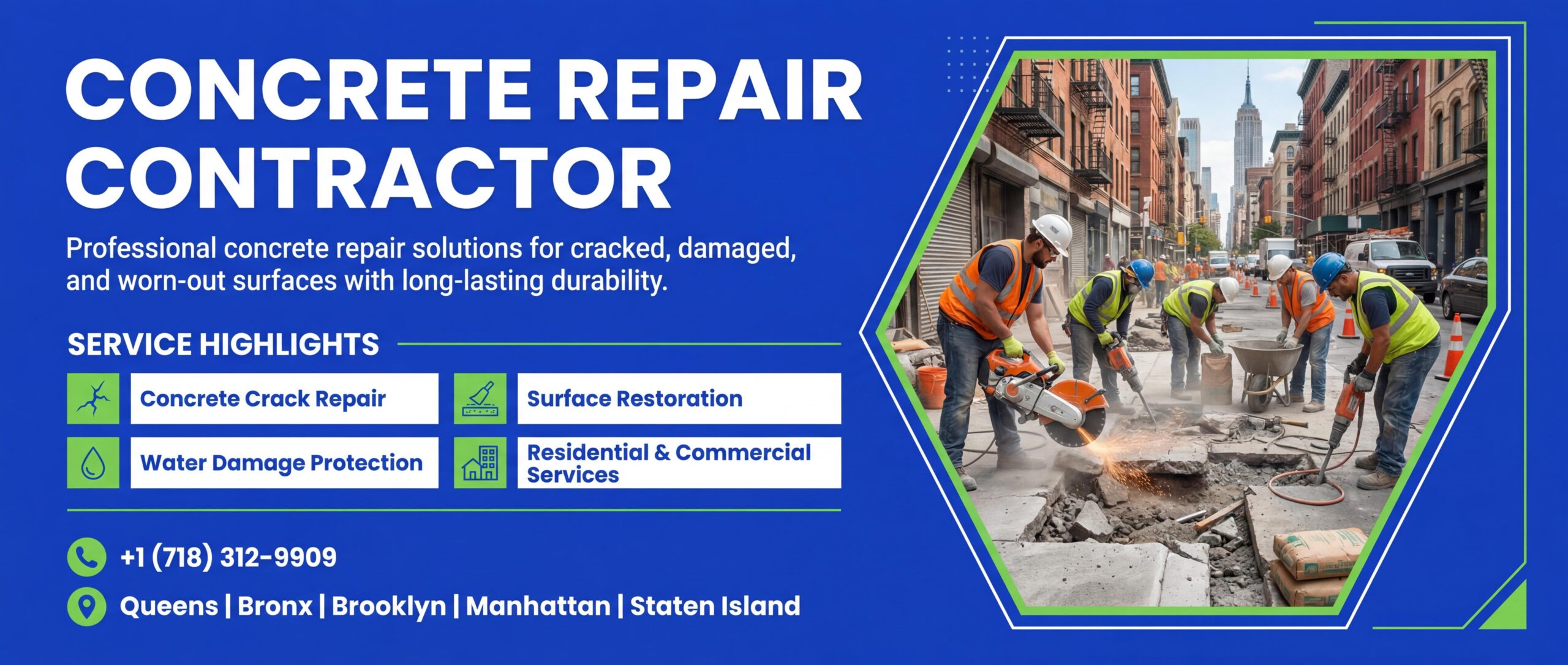
Common Concrete Problems and How Professionals Fix Them
- By Admin-WMC
- May 23, 2026
- 562
- News Updates
Structural instability and cracking in concrete can be attributed to several reasons, including:
Cracks in concrete result from moisture-induced stresses, excessive loading, settlement conditions, and thermal expansion, as well as movement of the structure itself. Cracks that are small on the surface may be considered cosmetic, but growing or deep cracks can reduce the capability of the concrete system to support loads and can permit moisture to enter through the cracks.
When it comes to professional concrete repair, specialists are more concerned with figuring out what is causing the problem rather than just fixing it. The methods of repair include epoxy injection, polyurethane sealing, crack routing, structural bonding systems, and reinforcement stabilization, depending on the severity of the cracks. Cracking treatments restore structure and minimize progressive cracking and long-term moisture damage.
Structural Surface Damage in Concrete Systems
Spalling occurs when the surface of the concrete starts to chip, flake, or break away due to freeze-thaw action, corrosion of reinforcement, moisture, or sub-optimal installation conditions. As deterioration continues, exposed reinforcement and deteriorating concrete surfaces can adversely affect structural durability and performance.
Professional repair includes the removal of damaged concrete, cleaning and treatment of exposed reinforcement, stabilization of the substrate, and the application of specialized repair materials that will restore the integrity and consistency of the surface. If severe, the concrete may need to be resurfaced or partially replaced in order to achieve long-term durability.
The seasonal variation of freezing and thawing, combined with moisture saturation of the concrete, is especially damaging to concrete systems in New York.
Uneven Slabs and Substrate Instability
Concrete movement is caused by settlement conditions, which result from the soil becoming unstable beneath the concrete due to erosion, imbalance of moisture, poor compaction, or drainage failure. Foundation movement under the concrete system is often revealed by uneven concrete slabs, driveways, and sidewalks that have settled, as well as structural surfaces that are misaligned.
Methods of professional correction can range from slab lifting and stabilization of substrates to drainage improvement, structural leveling, or complete replacement of concrete, depending on the degree of settlement conditions. The difficulty in this repair is that it needs to be done over a long period of time, which means addressing the damage to the concrete and the soil instability that is causing movement.
When concrete surfaces are uneven, they can cause stress to the structure over time and lead to serious safety issues if left untreated.
Moisture Intrusion and Waterproofing Failure
Moisture intrusion and failure of waterproofing is a significant concern.
One of the most destructive factors affecting concrete structures is water penetration. Over time, moisture intrusion can cause concrete to weaken, resulting in cracking, and corrosion of reinforcement, freeze-thaw damage, and surface deterioration.
Professional waterproofing systems are designed to minimize water penetration and maintain structural performance. Depending on exposure and structural needs, repair techniques can range from crack sealing and installation of protective coatings to installation of waterproof membranes, drainage correction, sealers, and moisture barrier installations.
In New York City, where concrete structures face harsh environmental conditions, moisture control systems are crucial to ensure long-lasting durability and structural integrity.
Reinforcement Corrosion and Structural Weakening
Incorporated steel reinforcement may corrode if moisture and oxygen can permeate the surface of the concrete. Corrosion and reinforcement expansion result in strain and pressure within the concrete, causing cracking, spalling, and structural instability.
Professional restoration usually comprises the removal of concrete, treatment or replacement of corroded rebar, a corrosion-resistant protection system, and structural concrete repair with high-performance materials. Good waterproofing and moisture control are essential to avoid further corrosion-caused deterioration.
One of the most severe long-term deteriorating conditions of concrete, reinforcement corrosion has a direct effect on structural integrity.
Drainage Deficiencies and Water Accumulation
Concrete deterioration can be caused by improper drainage, as it increases exposure to moisture below and around the concrete structure. Excessive standing water can cause cracking, settlement movement, erosion, and freeze-thaw damage, especially in exterior concrete applications.
Professional correction may involve grading improvements, installation of a drainage system, repair of expansion joints, integration of waterproofing, and slope correction to divert water flow away from the structure. Good drainage planning results in better long-term performance of concrete and minimizes the risk of future structural deterioration.
Professional Concrete Repair Solutions
The repair techniques for concrete deterioration must be technically developed depending on the structural conditions, moisture control, exposure to environmental elements, and requirement for long-term performance. Often, surface patching is not a solution if underlying structural and/or moisture problems have not been addressed.
White Marble Construction Inc. specializes in professional concrete repair and restoration, with a particular emphasis on providing long-lasting performance, structural durability, moisture resistance, and reinforcement stabilization. Repair systems are chosen based on the project at hand, as well as the various environmental exposure factors and structural conditions throughout New York, to provide reliable and durable repair solutions.
Add Comment